🔬 A map of the main strands of my research work.
Wealth Trajectories 📍
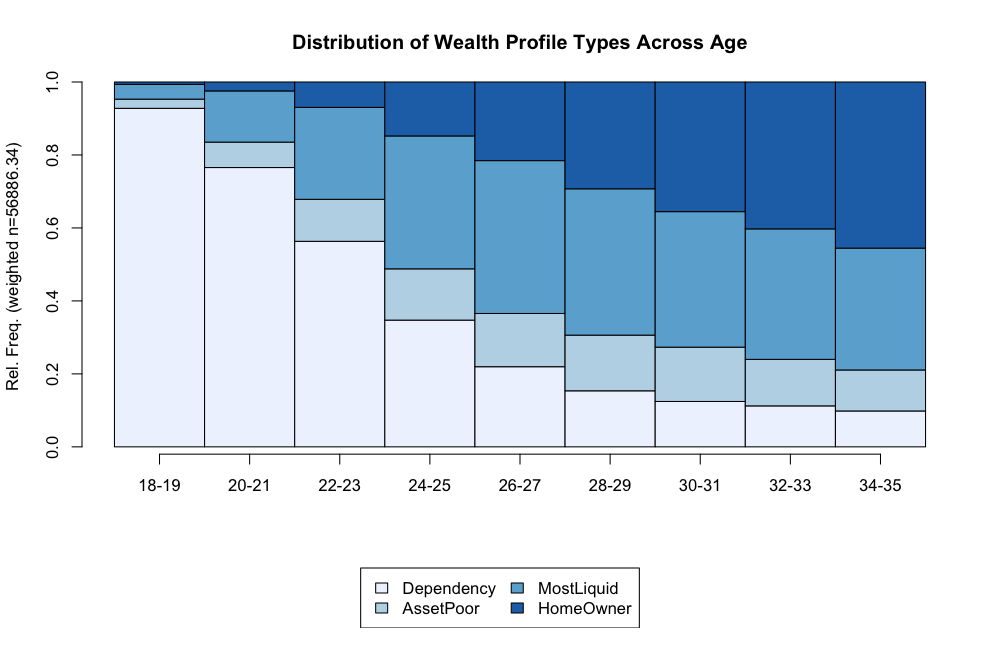
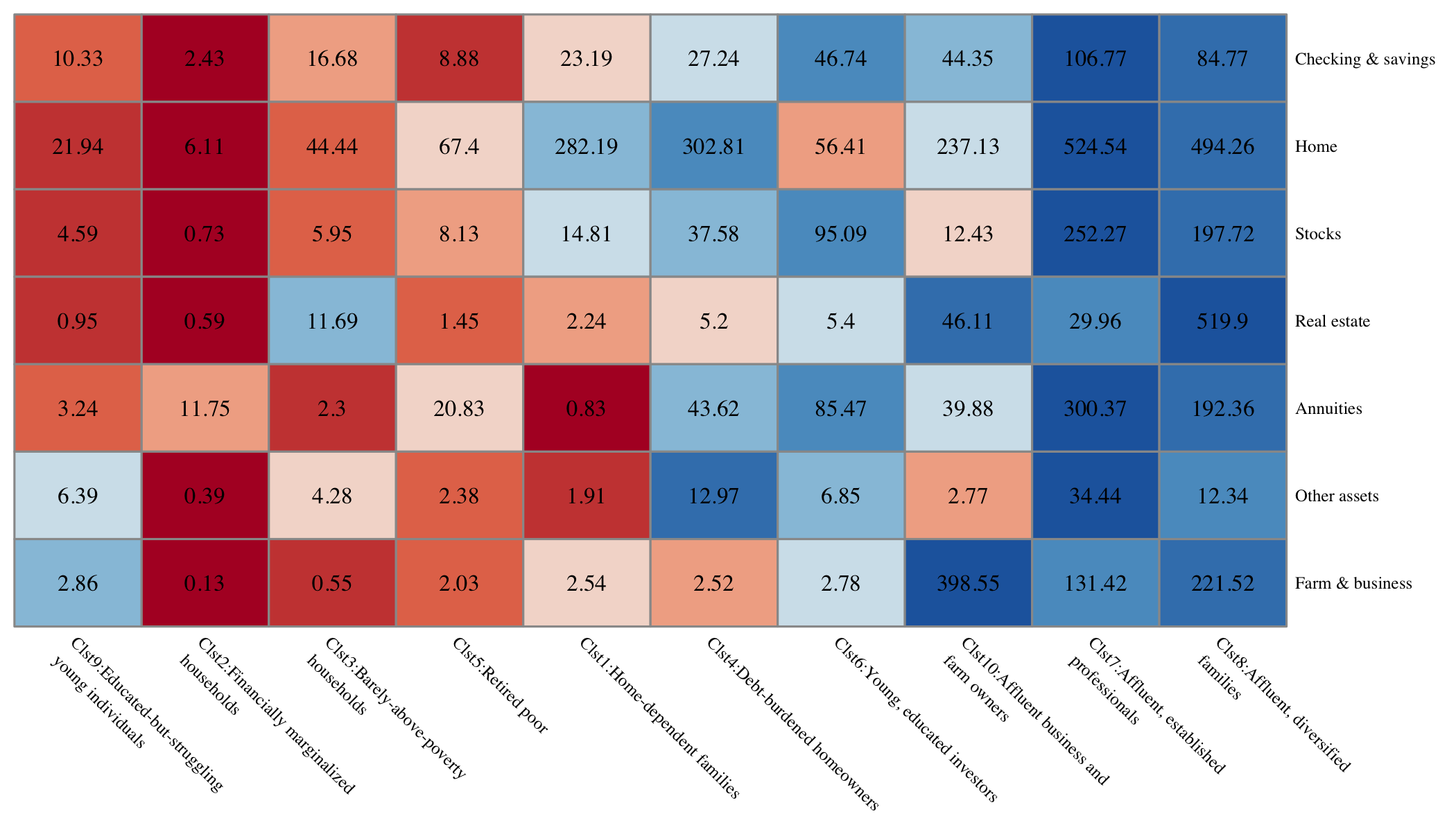
🏦 Wealth, typically defined as household assets net of debts, represents a distinct dimension of family economic well-being. Wealth enables families to invest in high-quality housing and childcare, buffer against economic shocks, and provide opportunities that cultivate skills, networks, and future expectations. Unlike income and other forms of human capital, wealth is highly institutionalized and detached from individuals. Therefore it can accumulate over time, and can be transferred across generations. As a result, wealth exerts enduring multigenerational effects and compounds economic advantage over the life course.
📈 Despite growing scholarly attention to wealth inequality, much of the existing literature continues to conceptualize wealth as a static snapshot of net worth at a single point in time. Consequently, we still know relatively little about wealth accumulation as a dynamic and interconnected process unfolding across the life course. This line of research examines wealth as both an outcome and a mechanism in the reproduction of inequality while extending existing approaches through greater attention to the temporal and compositional dimensions of wealth:
→ Qiu Shuyi. “The Long Arm of Childhood on Trajectory of Wealth Accumulation and Allocation Patterns in Early and Middle Adulthood” (R&R at Demography)
→ Qiu Shuyi. “The Long-term Impact of the Earned Income Tax Credit (EITC) Exposure in Childhood on Individual’s Wealth Trajectory in Adulthood” (Manuscripts Available Upon Request)
→ Keister, Lisa A., James W. Moody, and Shuyi Qiu. 2026. “Rethinking Financial Status: A Comprehensive Case-Based Approach.” Social Currents 13 (2): 106–25. [DOI]
→ Gibson-Davis, Christina, Lisa A. Keister, Lisa Gennetian, and Shuyi Qiu. 2026. “Net Worth Poverty in Childhood: Duration, Timing, and Educational Outcomes.” Demography 63 (2): 667–93. [DOI]
Place-based Wealth Inequality 📍
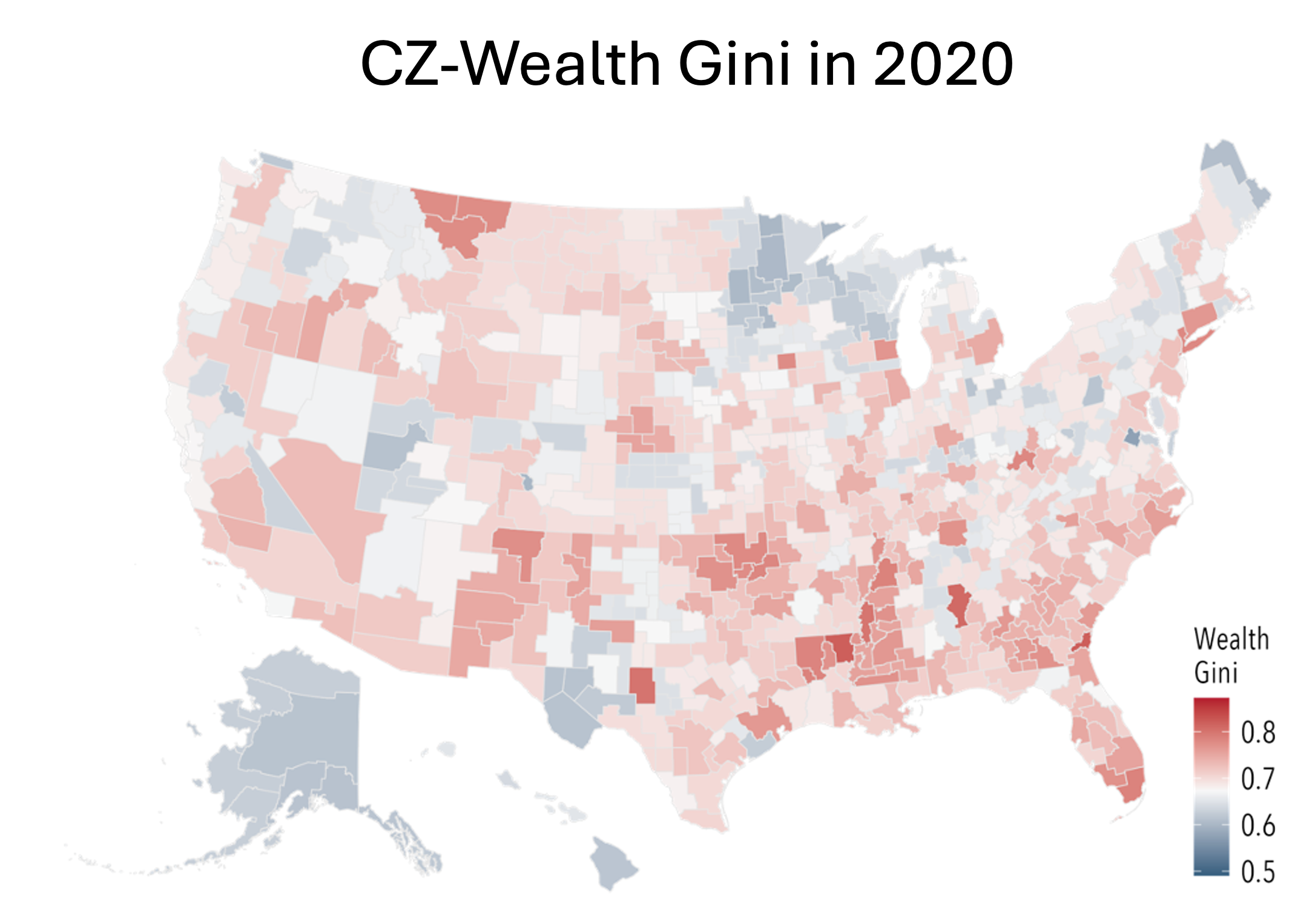

⚖️ Due to its cumulative nature, wealth is distributed far more unequally than income. While income Gini coefficients typically range from approximately 0.4 to 0.6, wealth Gini coefficients can exceed 0.8. In recent decades, place-based wealth inequality has also increased rapidly, particularly among families with children.
🏡 Living in places characterized by high and growing levels of wealth inequality may have long-term consequences for residents’ well-being through multiple pathways, including the unequal distribution of resources available to families and broader changes in neighborhood and community environments. My research in this area examines both the mechanisms and consequences of living in places marked by high levels of wealth inequality:
→ Qiu Shuyi, Christina Gibson-Davis. “Social Sterilization: The Effect of Wealth Inequality on Fertility Intentions and Outcomes” (Manuscript Available Upon Request)
→ Gibson-Davis, Christina M., Shuyi Qiu. “The Wealth Penalty of Place: Local Inequality, Family Resources, and Children’s Mobility” (Submitted for review)
→ Gibson-Davis, Christina M., Shuyi Qiu. “Unequal Grounds: How Place-Based Inequality Affect Subjective Well-Being” (Invited Contribution to RSF: The Russell Sage Foundation Journal of the Social Sciences)
Contextualizing Health Inequality 📍
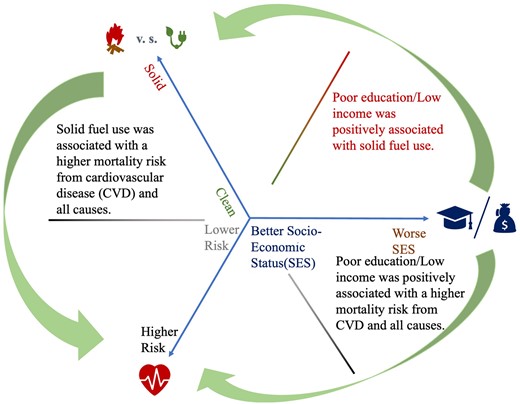
🩺 Health is shaped not only by individual socioeconomic resources, but also by the broader social and environmental contexts in which people live. My work in this area examines how socioeconomic status, mobility trajectories, and local opportunity structures interact with environmental and community conditions to shape long-term health outcomes and mortality risk across the life course. This thread of research explores how inequality becomes embodied through everyday exposures and social experiences.
→ Qiu, Shuyi, Xiaofang Chen, Xiaofang Chen, et al. 2021. “Solid Fuel Use, Socioeconomic Indicators and Risk of Cardiovascular Diseases and All-Cause Mortality: A Prospective Cohort Study in a Rural Area of Sichuan, China.” International Journal of Epidemiology 51 (2): 501–13. [DOI]
Open-Source Tools for Data Processing 📍
⛁ To answer these questions, I primarily rely on quantitative methods with large-scale longitudinal and population-based survey data. Examples of dataset I have been using (by context):
United States:
- Panel Study of Income Dynamics (PSID)
- General Social Survey (GSS)
- micro-level Decennial Census data
- Health and Retirement Study (HRS)
- National Vital Statistics System (NVSS)
China:
👩🏻💻 Many large-scale population datasets contain rich and valuable information, but their complex structures often create steep learning curves for new users. Alongside my substantive research, I am also passionate about developing open-source tools that simplify the processing, harmonization, and analysis of these datasets. Some of my ongoing projects and maintained packages are available on my GitHub page. Below is the list of package(s) I have developed:
→ Qiu, Shuyi. “psidread: Streamline Building Panel Data from Panel Study of Income Dynamics (‘PSID’) Raw Files,” January 15, 2024. [DOI] [CRAN] [User Guide]
🔍 You are always welcome to use these tools and report bugs or issues if you encounter any. I believe open-source tools are collective intellectual endeavors, so I sincerely appreciate all feedback, suggestions, and contributions that help improve these projects :)
💡 I always enjoy developing collaborative research and conversations across disciplines, methods, and career stages. You can easily reach me through the linked icons below or just email me.